Media, 1st-6th
Thursday, May
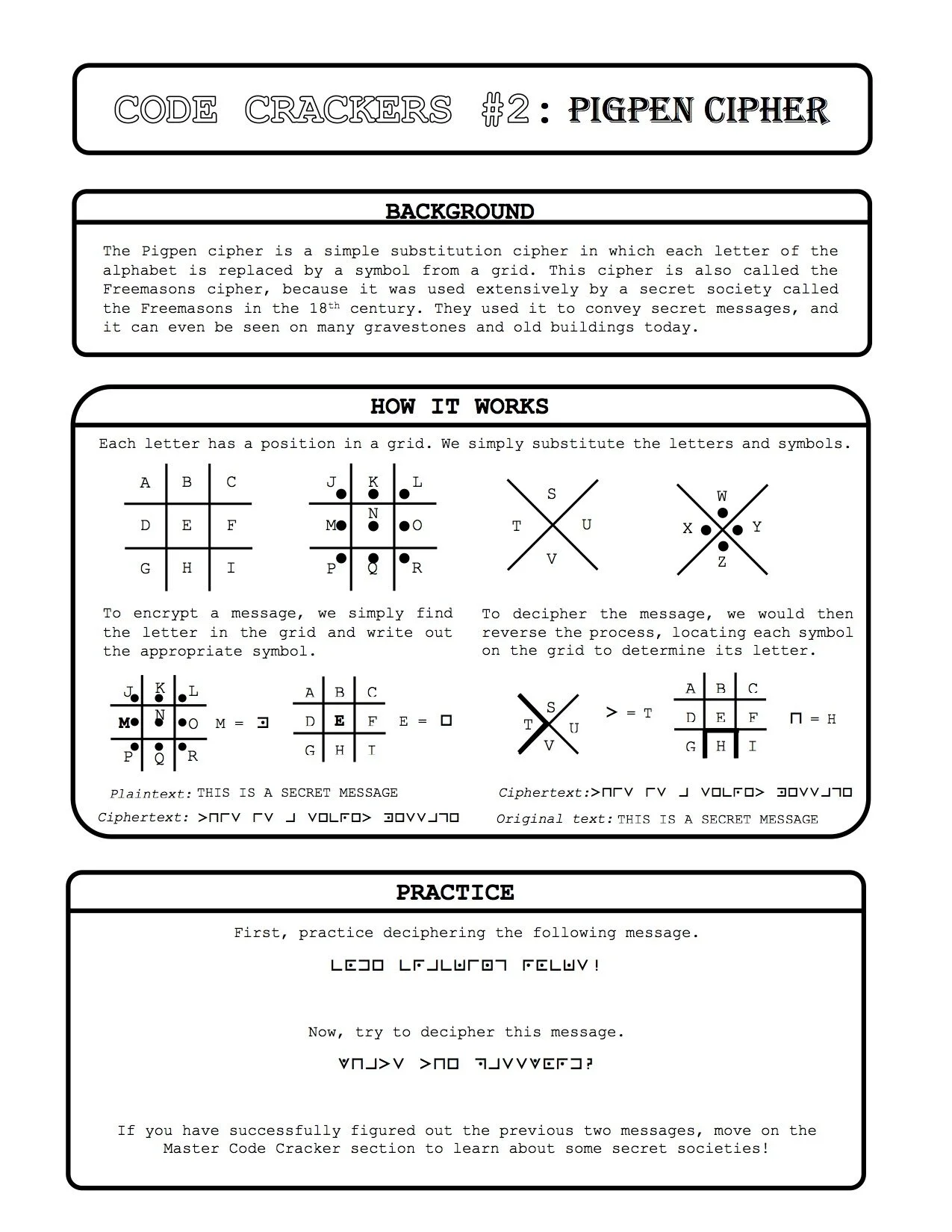
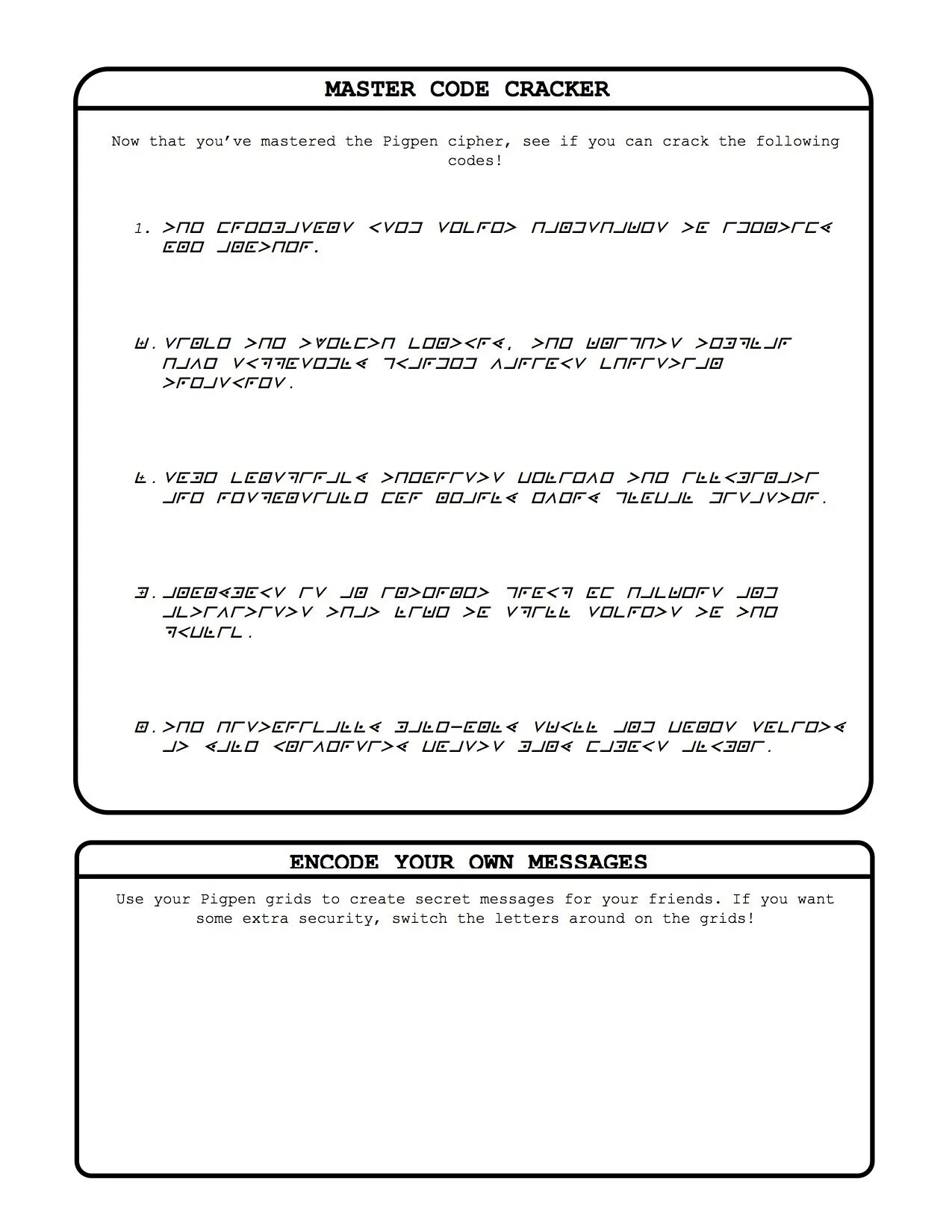
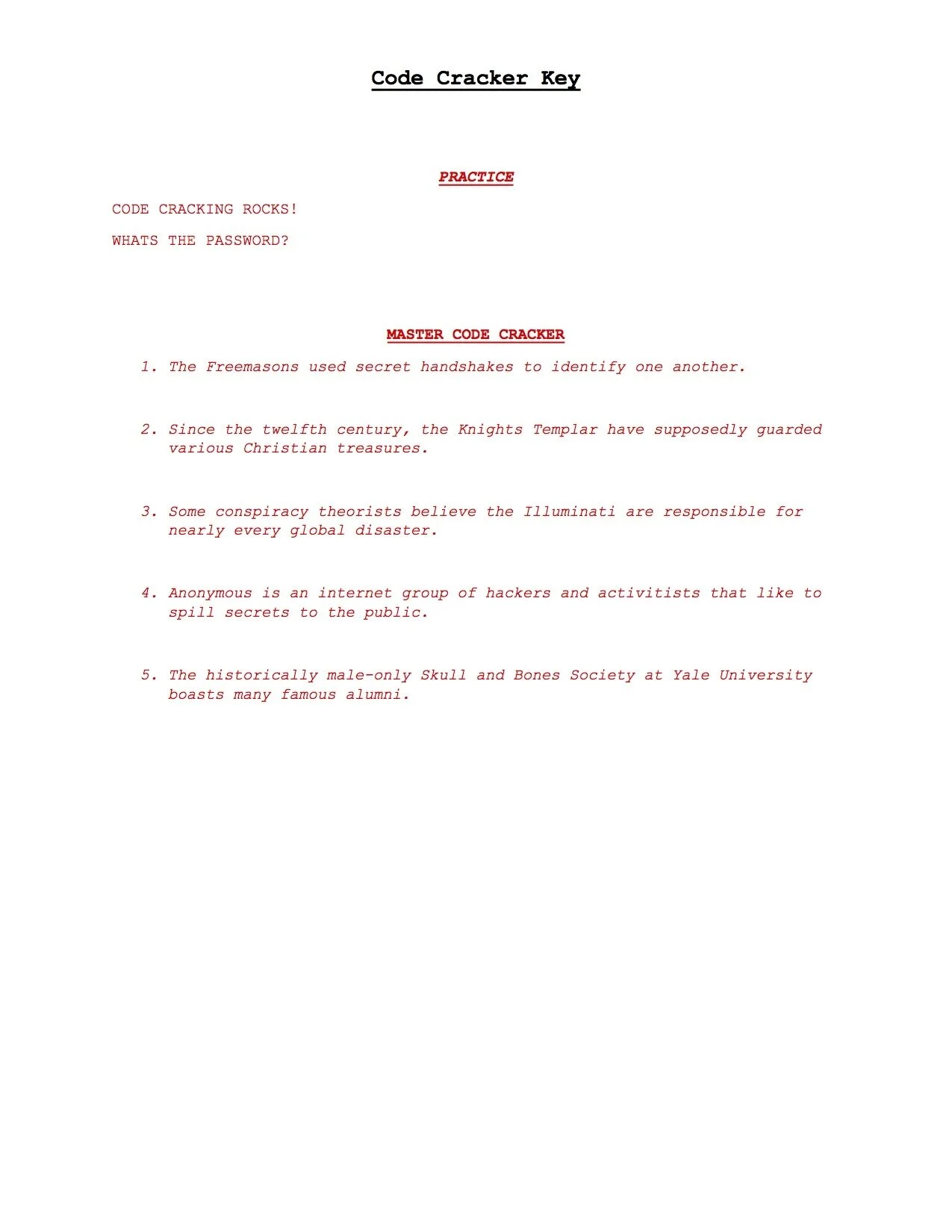
For today's Media lesson, you will learn a secret cipher, called the Pigpen Cipher, that has been around for hundreds of years. I've included a copy of the code here, along with some fun practice sentences for you to decode and an answer key.
Do you like Japanese food? Here are two books, one fiction (The Wakame Gatherers) and one nonfiction (Magic Ramen), about two different Japanese foods. Both books mention a time in the past, during World War II (1939-1945), when Japan and the U.S. were at war with each other. Both books show ways in which their characters value and nurture peace.
”The Wakame Gatherers” by Holly Thompson
Questions to think about as you listen:
• What are the different ways in the book that seaweed is used? Did any of them surprise you? Would you like to try any of them? Do you like to try new foods?
• If you were invited on a seaweed-gathering adventure, would you like to go? Why or why not?
• Why does Nanami hesitate before translating Baachan’s comments about the war to Gram? What does Nanami mean by, “I can’t imagine parts of me at war with each other?” What does Baachan mean when she asks Nanami to “always protect this peace?”
”Magic Ramen: The Story of Momofuku Ando” by Andrea Wang
Questions to think about as you listen.
• What does Momofuku Ando mean when he said, “The world is peaceful only when everyone has enough to eat”? Do you agree? Why?
• Momofuku Ando improved his product through the years. Can you think of any products that you use that have gone through different innovations or improvements?
• What do you think Momofuku Ando’s family was like? How do you know that?
I hope you enjoy these books as much as I did. If you feel like sharing any of your thoughts about any of these questions, you can email me. You know I always love to hear what you think about the books we share!
Also, here is a link to a free audiobook of a fun (and spooky) Japanese folktale, The Boy Who Drew Cats.
Media, 1st-6th
Thursday, April 23
This week you are creating a map of your own imaginary land. In the video, I go over some geography terms for different land and ocean features, and your challenge is to see how many of these features you can include in your map.
Here is a list of the features to try and put into your imaginary world. Your map should include both land and sea in order to fit in as many of these as you can. Many will be things you all know, but I've included definitions, examples and images of those that might be new to some of you. If you want, you can use an atlas or the internet to find the places in the examples, and to look up answers to the questions.
Archipelago, Bay, City, Desert, Island, Isthmus, Lake, Mountains, Peninsula, River, Road, Strait
Archipelago – a cluster or chain of islands
Examples: The Bahamas, the Galapagos Islands, the Aleutian Islands
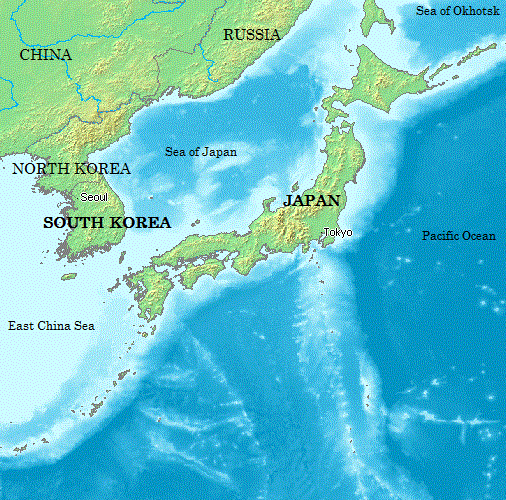
Japan is an archipelago that is shaped a little like a dragon. Which direction is the dragon facing? What ocean is it looking out over? What other countries that are archipelagos can you find on a world map? Which U.S. state is an archipelago?
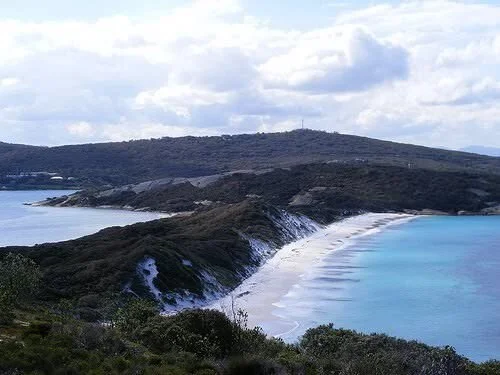
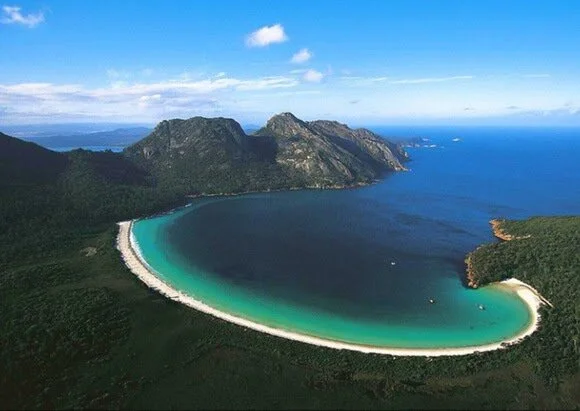
Bay – a part of the coast where the land curves in so that the ocean is surrounded by land on three sides
Examples: Bay of Fundy (Canada), Amundsen Bay (Antarctica), Chesapeake Bay (U.S.)
Where is Shark Bay? And would you dare to go swimming there?
Isthmus – a narrow piece of land with water on each side that joins two larger areas of land
Examples: Isthmus of Panama (Panama), Isthmus of Suez (Egypt)
Both these of these examples are isthmuses that have canals that have been dug across them, for ships to use as shortcuts. What two bodies of water does the Suez Canal connect? If you wanted to sail from Italy to India before the Suez Canal was first opened to ships (in 1869), which continent would you have to sail around to get there?
Peninsula – a long piece of land that sticks out from a larger piece of land into the sea or a lake
Examples: Kamchatka (Russia), the Yucatan Peninsula (Mexico), Denmark
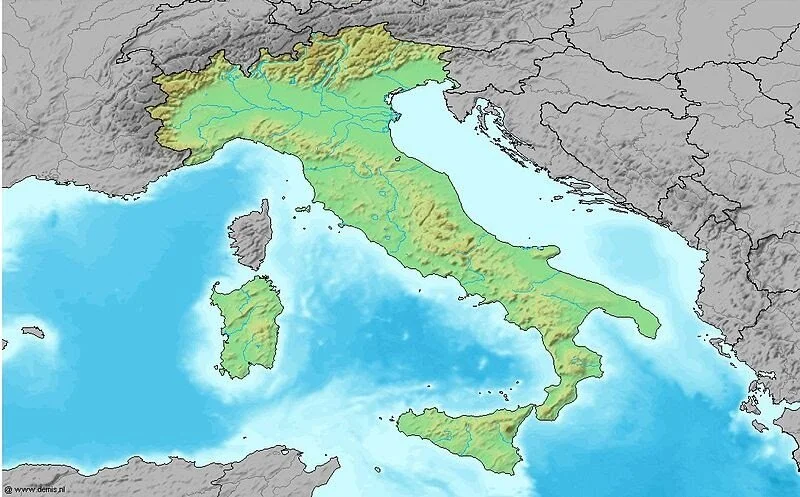
Italy is a peninsula that is shaped like a boot. What island is the Italian boot about to kick? Which U.S. state is a peninsula?
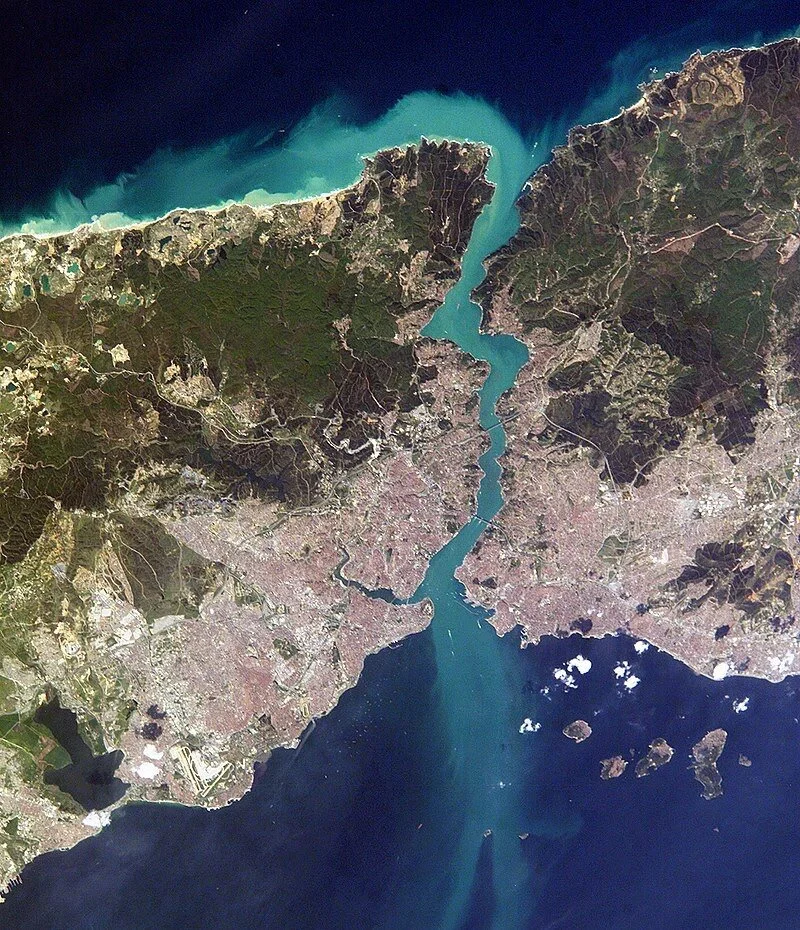
Strait – a narrow area of sea that connects two larger areas of sea
Examples: The Bering Strait, the Strait of Gibraltar, the Strait of Magellan
If you are in a boat heading north through the Bering Strait, you are passing from (which?) Ocean into (which?) Ocean? If you are sailing east through the Strait of Gibraltar, which country will you be able to see to your north? To your south? If you are passing through the strait of Magellan (Chile), you are sailing among the islands of what archipelago? (Hint: The name means "Land of Fire" in English.)
What will your imaginary map world be like? Will your ocean have sea monsters or mermaids drawn into it, like the old maps I shared with you last week? Will it show the way to buried treasure? Will any of your map features have shapes that resemble something else (like Japan and Italy do)? What will you name your fantasy country, and its lakes, rivers, bay and peninsula?
I hope that, just like the author in the story a few weeks ago, How I Learned Geography, you let your imagination soar and carry you away with it. If you make a map, please take a picture and share it with me. I can't wait to see your creations!
Media, 1st-6th
Thursday, April 16
This week, we will continue thinking about maps. Sometimes fantasy writers who set their story in an imaginary place will create a map in the front of the book, to illustrate their make-believe world. Here are three examples. I bet you can fill in the blanks!
“The Wizard of…”
“Alice in…”
“The Chronicles of…”
What others can you think of? Here are my recommendations for some audio books, set in imaginary places, that you can listen to (for free) through stories.audible.com. You don’t have to listen to all of it today, but throughout the week, try to finish (at least) one of these stories.
1st & 2nd:
”Alice’s Adventures in Wonderland” by Lewis Carroll
”The Wizard of Oz” by L. Frank Baum
3rd & 4th:
“The Fairy’s Mistake” by Gail Levine
“Arlo Finch in the Valley of Fire” by John August
5th & 6th:
“Book of a Thousand Days” by Shannon Hale
“Crash Landing” by Zac Harrison
Looking for a good book to read that includes a map in the story? Here are two great ones that 5th and 6th grade students might enjoy:
“The King’s Fifth” by Scott O'Dell
“Treasure Island” by Robert Louis Stevenson (Use this link for a free Kindle version of the book!)
Next week I’ll have a fun activity for you to create your own map of your own imaginary land. Stay tuned, and keep reading!
Media, 1st-6th
Thursday, April 9
Please start this week's media lesson by clicking on this link and watching the video of actor Ed O'Neill reading How I Learned Geography, by author and illustrator Uri Shulevitz. After hearing the story, think about the following questions:
· How would you feel if you had to move and leave behind all your possessions?
· The boy and his family often go to bed hungry. If you have not eaten in 3 days and are starving, what would be the first meal that you would have? Is there anything that you would refuse to eat no matter how hungry you are, i.e. bugs, lima beans, pig's tongue?
· The boy becomes fascinated by the map and spends hours studying its every detail. If you could visit anywhere in the world, where would it be? What is the funniest name for a country that you know? If you could name your own country, what would you call it?
Next, watch my video to hear the true story behind the picture book, and to hear instructions for some fun map-based activities you can try, using the map images posted here, an internet search or Google Earth.
Here are the names of the five different cities, in order, in which Uri Shulevitz had lived by the time he was 24 years old:
Warsaw
Turkistan
Paris
Tel Aviv
New York City
Challenge questions:
What five countries did the author live in?
How many different continents did he live in? Which ones?
If you decide to do a drawing, or to find the answer to one of the questions from above (or the super challenge question I pose in the video), I would love to hear from you! You can email me a picture of your drawing, or any answer you want to share.
Have a wonderful Easter!
Ms. Gray
Media, 1st-6th
Thursday, April 2
Go to stories.audible.com to find a selection of recorded books that Audible has generously made available for free during the time schools are closed because of coronavirus. My pick for this week is “Story Party.” This recording has 12 chapters, and each chapter has at least 3 stories, told by different professional storytellers. They are great for listeners of all ages, from kindergarten though adults. They are perfect for listening to together as a family.
For example, students might draw kamishibai illustrations (see activity below!) for a story as they listen at the kitchen table during a time while parents are preparing a meal or doing other activities nearby and listening with them. Try listening to a chapter a day. Talk with a friend or classmate about each day’s stories, and share what your favorite story of the day was. Or browse through the many other free recorded books at stories.audible.com. You and your family might choose something else to listen to together!
Making a Kamishibai Box
Materials:
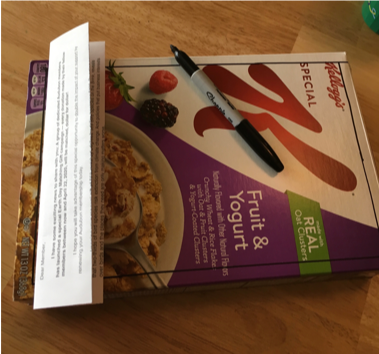
A cereal box (or box of similar size and shape)
Scissors
Black permanent marker
Clear tape
Directions:
Cut off the cardboard flaps from the top of the box.
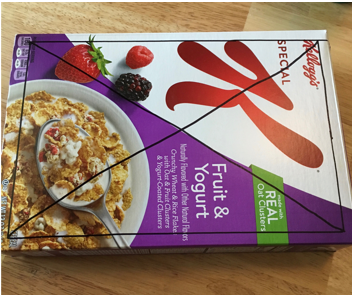
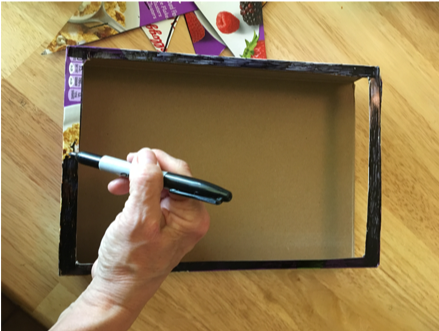
Use the marker to draw a line along each of the 4 sides of the front of the box. The lines should be about an inch inside each edge.
Use a ruler to help you make the lines straight. Or if you can’t find a ruler, a folded piece of scrap paper will work!
Now draw diagonal lines from corner to corner, making an X inside the rectangle you have drawn.
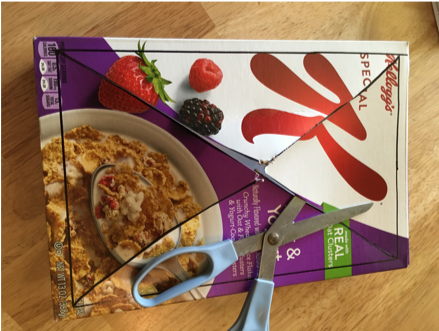
Use your scissors to cut along the X, to the corners of the rectangle. (Be careful NOT to cut all the way to the corners of the box. Stay inside your rectangle.)
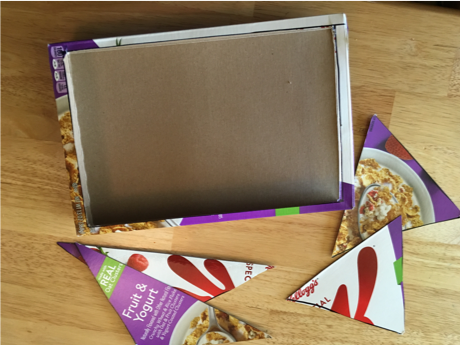
Cut along the sides of the rectangle you drew. Now you have a frame for kamishibai box and 4 triangles of cardboard.
Use your marker to cover up the cereal box images on the front of your box.
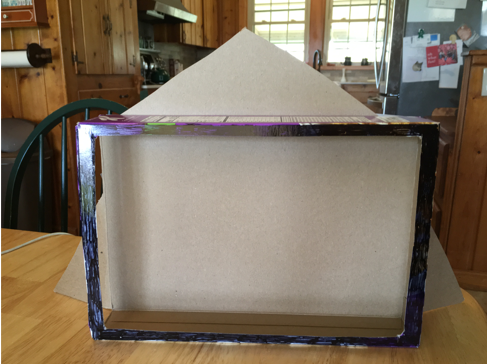
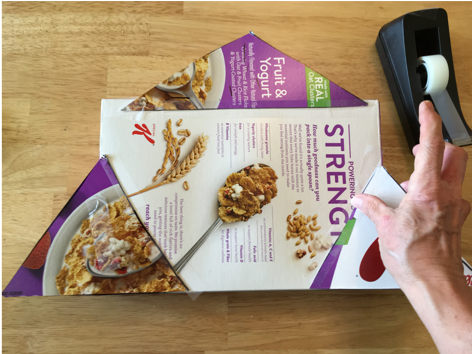
Tape 3 of the cardboard triangles to the back of the box, as shown in the picture.
Fold the 2 triangles on the sides back just a little. This will help your kamishibai box stand up without falling over.
If you want, use markers, crayons or stickers to decorate the triangles.
Now your kamishibai box is ready. Time to grab some paper, crayons, markers, or color pencils, and illustrate a story use with it!
What story do you want to illustrate for your kamishibai box? You can try one that you know well enough to tell from memory, such as the Gingerbread Man or the Three Billy Goats Gruff. You could can also make up a story of your own or illustrate a story from the one of the free recorded books on Audible. You can even create pictures to teach somebody step-by-step illustrations on how to do something, like how to show kindness to others.
I can’t wait to see your kamishibai boxes and the stories you create for them! Email me a picture of your creations. Have fun!